Skip to content
Manshin

Blog

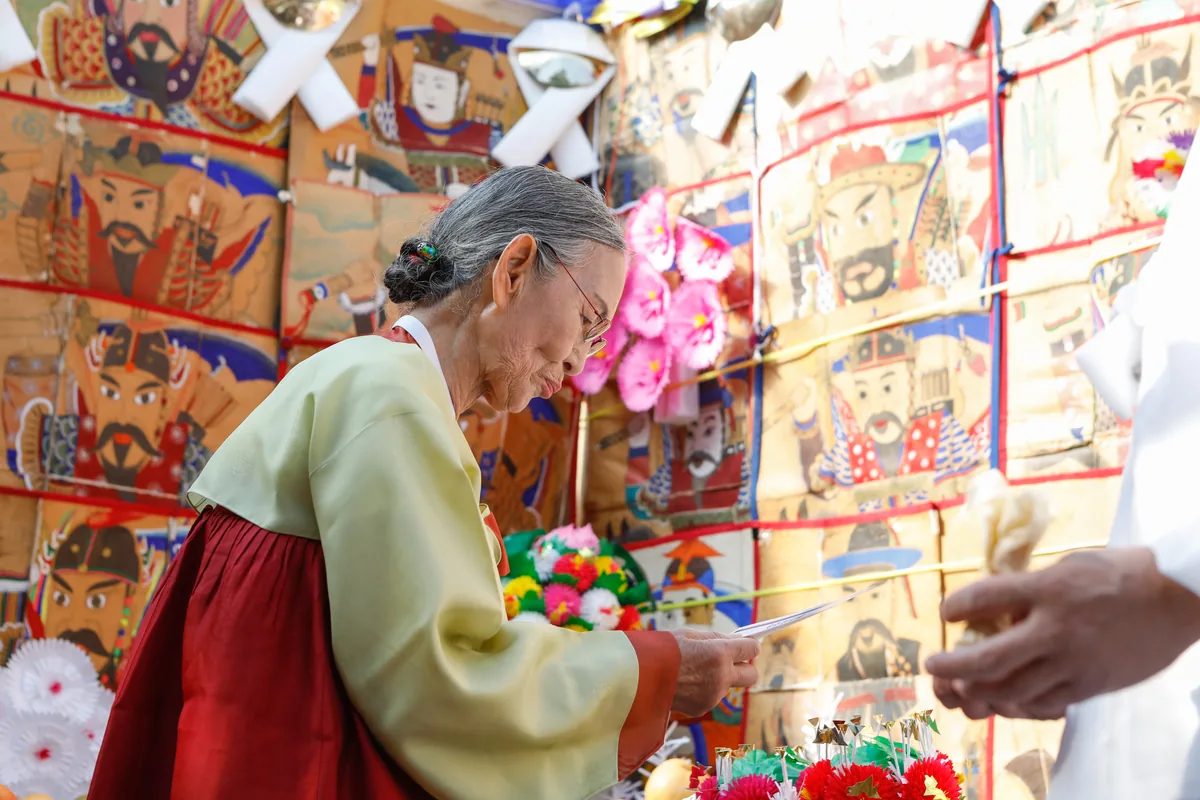
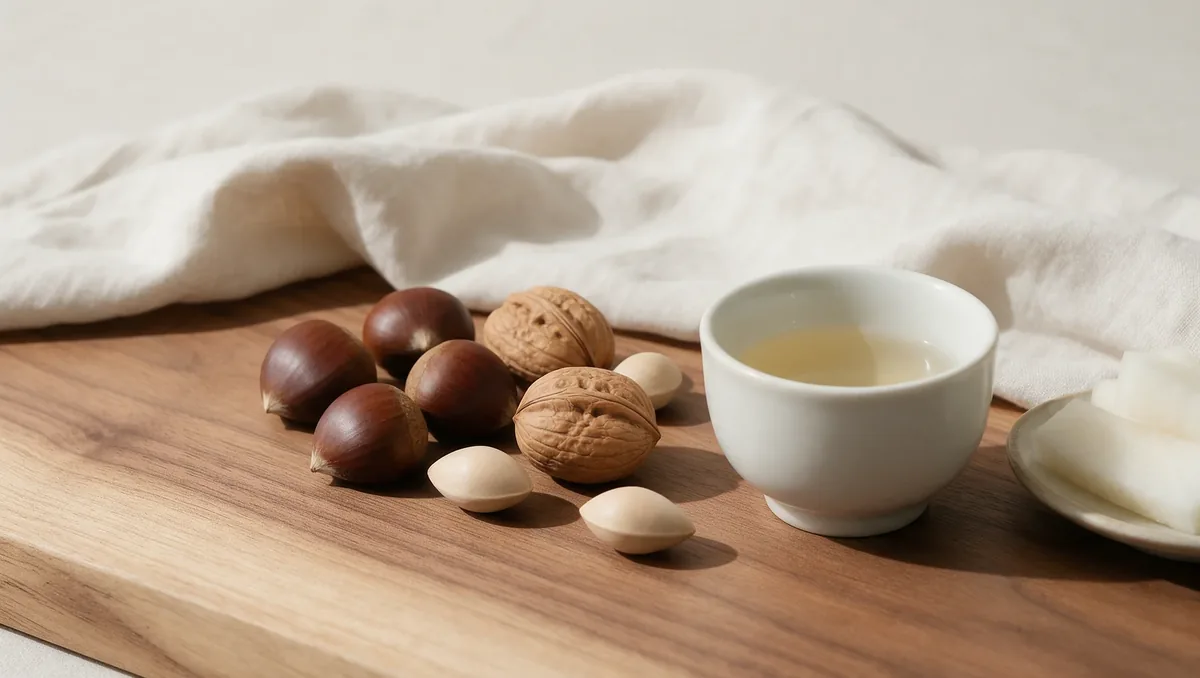
On a wooden board are four chestnuts, two walnuts and three ginkgo nuts still in their shells, and to their right a small white cup holding a pale yellowish liquid. At the far right, a small dish cut off by the frame holds a few white pieces. Behind them a creased white cloth is spread out.
Culture & history

Why Was There Radish in Daeboreum Bureom? Objects of the First Full Moon in Old Records

In old records, the list of bureom for Daeboreum includes radish alongside chestnuts and walnuts. A little surprising if you thought bureom meant only hard nuts. From the bureom cracked at dawn to the gwibalgisul drunk unwarmed, one cup each in the morning, we look through old records at the objects used on the first full moon of the lunar year.

A seaside landscape under a cloudy sky. In the foreground a low wall of porous black stone runs across the scene, and dry grass around it leans to one side in the wind. Beyond are black rocks with breaking waves, a grey sea, a gentle mountain far off on the left, and a small island near the horizon.
Culture & history

The Month of Welcoming and Sending Off the Wind Goddess: Jeju Chilmeoridang Yeongdeunggut

On Jeju, people have long held that Yeongdeung Halmang, goddess of the wind, crosses the sea in the second lunar month and then leaves again. We look at when and in what order the Chilmeoridang Yeongdeunggut that welcomes and sends her off is held, and how haenyeo divers and boat-owning families have put on this ritual together.

In front of a wall crowded with paintings of spirits, a white-haired woman in a pale green jacket and red skirt bows her head over a sheet of paper in her hands. Another person's hand is visible on the right.
Culture & history

What Does Mansin Mean? Stories from Dictionaries and Old Records

Korean dictionaries define mansin as a respectful term for a female mudang, or shaman. The same name survives in a song sung in gut rituals, in shaman paintings held by a museum, and in the writing of a researcher who has met today's mudang. We also look at whether the characters 萬神 and the reading 'serving ten thousand gods' are really where the word comes from.

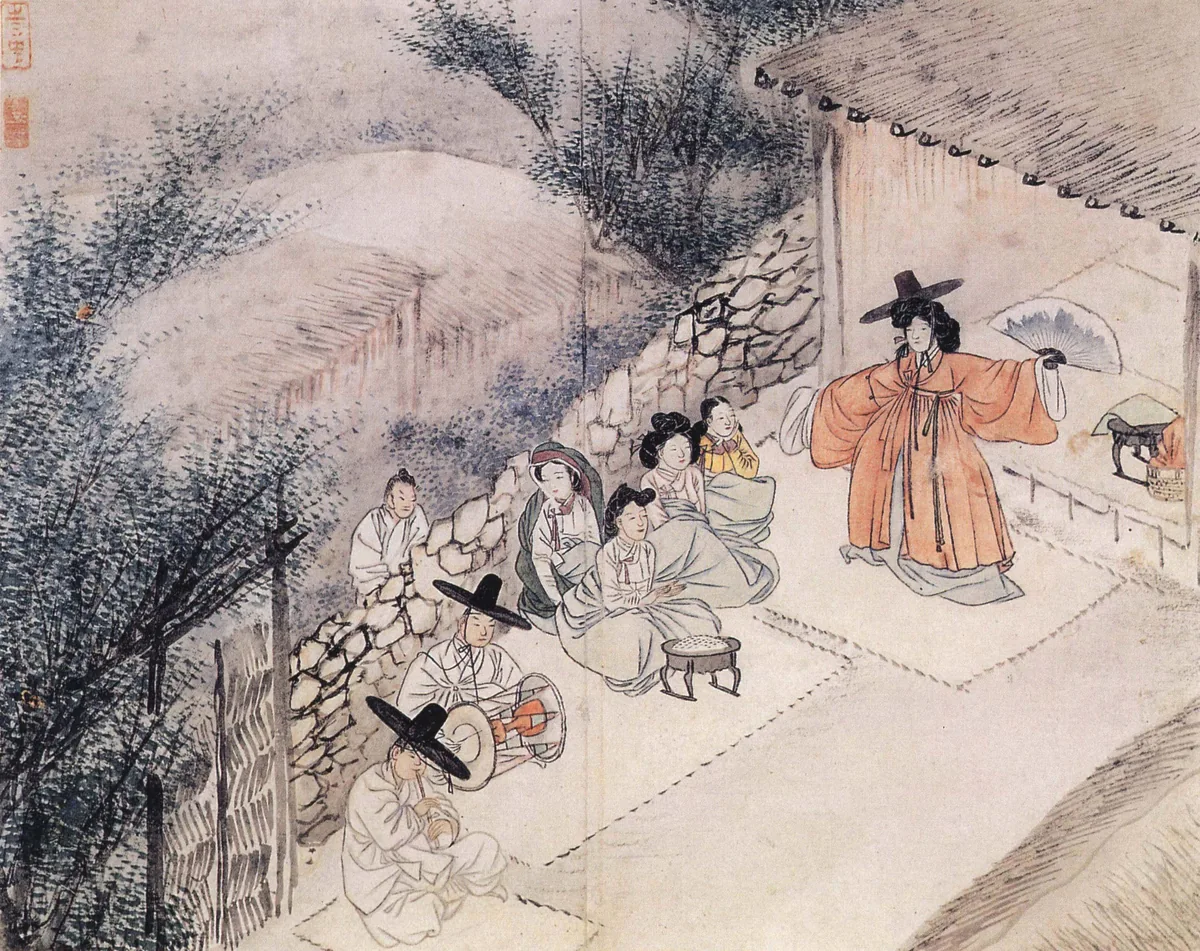
Sin Yun-bok's Munyeo Sinmu: a female shaman dancing with a fan, and musicians
Culture & history

Joseon Sent Its Shamans Away, Yet for 'the King's Sake' a Mudang Was There

A 1443 entry in the Veritable Records has an official saying that female mudang were sent outside the walls to care for the sick at the Hwarinwon. A memorial of 1477 describes the state mudang leading palace people to Gaeseong, and the governor of Gaeseong dancing face to face with the state's female mudang. Through two entries in the Veritable Records, we follow a Joseon that sent mudang away and yet kept them close.