
Why Was There Radish in Daeboreum Bureom? Objects of the First Full Moon in Old Records
In old records, the list of bureom for Daeboreum includes radish alongside chestnuts and walnuts. A little surprising if you thought bureom meant only hard nuts. From the bureom cracked at dawn to the gwibalgisul drunk unwarmed, one cup each in the morning, we look through old records at the objects used on the first full moon of the lunar year.

On this page
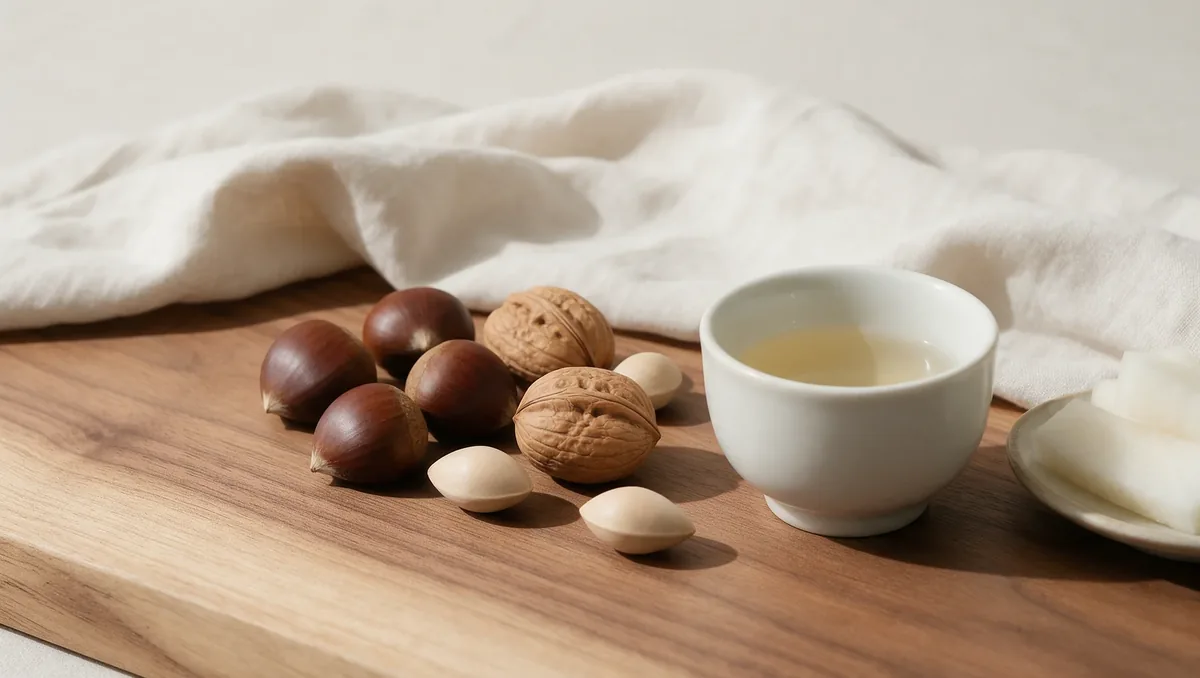
In old records of Jeongwol Daeboreum, the first full moon of the lunar year, the list of bureom includes chestnuts, walnuts and ginkgo nuts, and tucked among them is radish. If you thought bureom meant only hard-shelled nuts, this is the kind of entry that makes you tilt your head. Starting from that radish, let's look at what the objects used on Daeboreum were made of and when they were used.
Daeboreum was a day full of objects
Daeboreum falls on the fifteenth day of the first lunar month, the night of the year's first full moon. Its Sino-Korean name is Sangwon (上元). The solar date changes every year, so you can check that year's date in the Korea Astronomy and Space Science Institute's annual calendar data. In 2026 it falls on March 3.
In its entry on Daeboreum, the Encyclopedia of Korean Culture (『한국민족문화대백과사전』), published by the Academy of Korean Studies, cites two surveys of seasonal customs to explain that an unusually large share of the year's seasonal observances were concentrated on this one day. Among the foods it lists yakbap (sweet rice with nuts and dates), five-grain rice, dried preserved greens, bokssam, bureom and gwibalgisul; among the activities, raising a byeotgaritdae pole, daribalgi (walking across bridges), flying kites away and jeung-chigi (casting out a straw effigy). It was a day when things to eat, things to set up and things to send flying all came at once.
I chose five of them. First, two tables give a quick overview of what each was made of and how it was used, and in which records, and for which region, it is described. Then we'll look at them one by one.
| Object | Materials | Recorded use |
|---|---|---|
| Bureom | Raw chestnuts, walnuts, ginkgo nuts, pine nuts; radish in old records; yeot (taffy) in Uiju | Cracked between the teeth at dawn while praying for a safe year without boils |
| Gwibalgisul | Unwarmed liquor (in recent times, brewery-made) | One cup before breakfast, hoping for sharp ears and good news all year |
| Bokssam | Gim (laver), or boiled aster greens, napa cabbage, taro or castor-bean leaves | Rice wrapped and eaten, said to be wrapping up good fortune |
| Byeotgaritdae | A pole, rice-straw bundles, ears of various grains, cotton | Raised the day before Daeboreum, taken down on the first day of the second lunar month, its grain made into rice cakes |
| Misfortune-warding kite | Bamboo spars, changhoji paper, silk thread | On the full-moon day, written with characters such as 厄 and sent off by cutting the string |
| Object | Records checked | Scope |
|---|---|---|
| Bureom | Gyeongdo japji, Yeoryang sesigi, Dongguk sesigi (late 18th to mid-19th century, centered on Seoul); Uiju custom from Dongguk sesigi | Records centered on Seoul; widely practiced today |
| Gwibalgisul | Dongguk sesigi (yurongju), the 1995 encyclopedia author's view | Described without regional limits |
| Bokssam | Yeoryang sesigi, Dongguk sesigi | Described without regional limits |
| Byeotgaritdae | Dongguk sesigi, the 1995 encyclopedia author's view | Described as south of the Han River (Hoseo, Honam, Yeongnam) |
| Misfortune-warding kite | Gyeongdo japji, Sangwon section; Dongguk sesigi | Centered on Seoul records |
Bureom: why is radish on the list?
The same encyclopedia's entry on bureom reproduces the full-moon record from Dongguk sesigi. In plain terms, it says this: early at dawn, people cracked raw chestnuts, walnuts, ginkgo nuts, radish and the like between their teeth, praying for peace all twelve months of the year and for no boils or sores. The practice was also called jakjeol (嚼癤), "biting the boil," and gochijibang (固齒之方), "a way to strengthen the teeth." The entry also includes a record that in Uiju, young boys and girls cracked yeot (a hard taffy) at dawn, and that this was called chigyo (齒較).
So in the old records, the condition for bureom is closer to "something you can crack noisily at dawn" than "a nut." Raw radish and taffy both meet that condition. Looking at slightly earlier records, Yu Deuk-gong's Gyeongdo japji from the late 18th century says that biting chestnuts and radish while making a wish is called jakjeol, and Kim Mae-sun's Yeoryang sesigi of 1819 reportedly notes only, briefly, that people cracked three chestnuts.
The bureom sold in markets today centers on hard-shelled nuts such as chestnuts, pine nuts, walnuts and peanuts. The encyclopedia, too, explains that such nuts are collectively called bureom and that eating them is called "eating bureom."
Two lines of explanation are given for the name. One concerns sound. Bureom is a word for hard nuts and also a contraction of buseureom, "boil," so the belief is said to come from the overlapping sounds, much as walking on a dari (橋, bridge) on this night was said to strengthen one's dari (脚, legs). The other concerns the shell. Since the idea of "strengthening the teeth" appears quite often in old records, this view sees it as a magical notion that grew out of the hard shell. The records do not settle which came first.
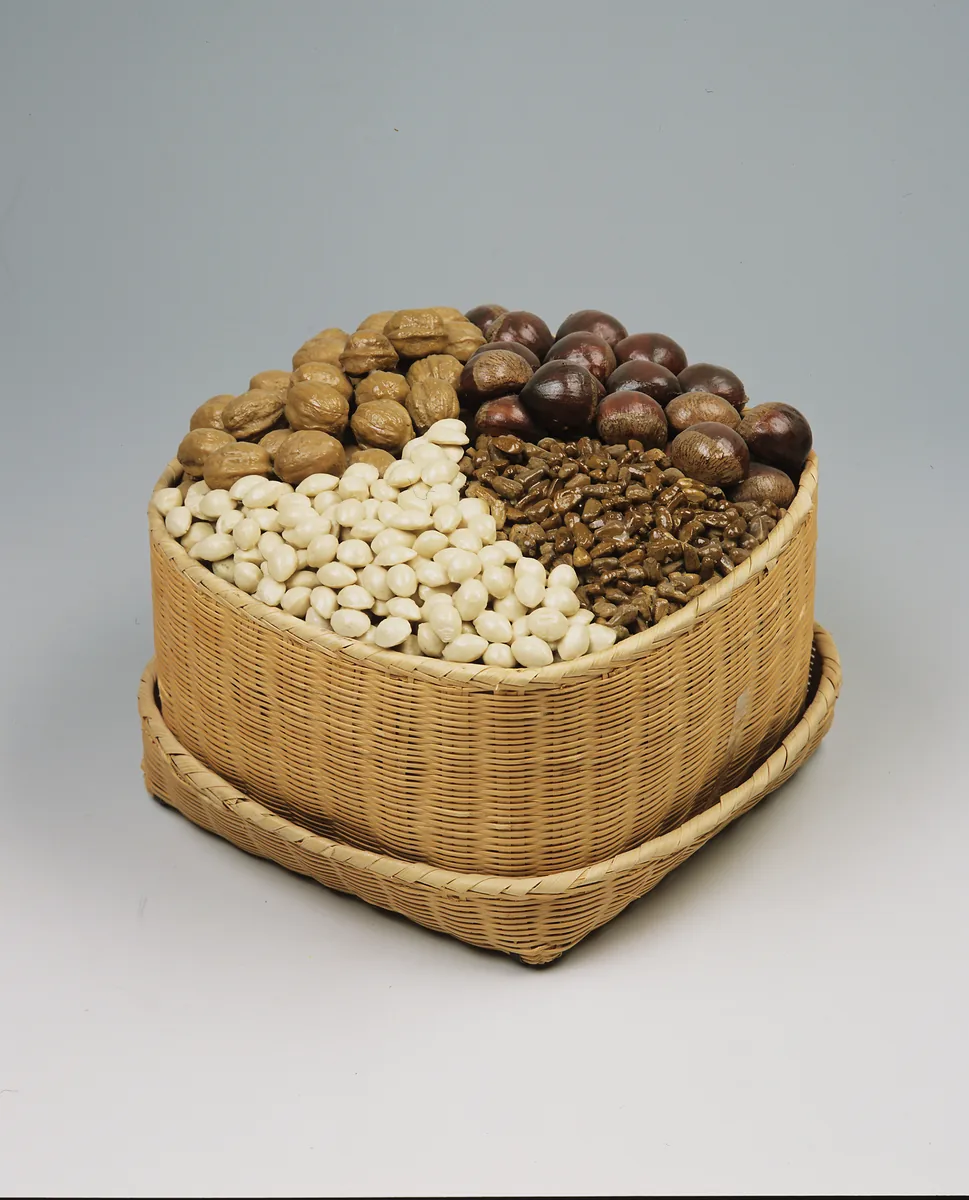
National Folk Museum of Korea Archive · "Bureom" (00152150) · Photo by Seo Heon-gang · KOGL Type 1 · Resized only
Gwibalgisul: the key is that it isn't warmed
The encyclopedia explains gwibalgisul as liquor drunk before breakfast on the morning of Daeboreum to make the ears sharp. In Chinese characters it is imyeongju (耳明酒), "ear-brightening liquor," and Dongguk sesigi writes it as yurongju (牖聾酒). The name reads roughly as "liquor that opens deaf ears."
With this drink, temperature comes before ingredients. It was drunk cold, without warming, and everyone, young or old, man or woman, even those who could not drink, took a cup. It is not liquor for drinking freely like at a feast, but a sip touched to the lips in the morning. With that sip, people hoped to have sharp ears and hear good news all year.
There is a story about the ingredients, too. Because gwibalgisul was believed to be tied to the year's fortune, good rice was set aside after the autumn harvest to brew it. In other words, the drink for the new year was prepared from the autumn before. The entry also records a change: it used to be brewed at home, but in recent times brewery liquor came to be used instead. Everything up to here comes from the encyclopedia entry written in 1995.
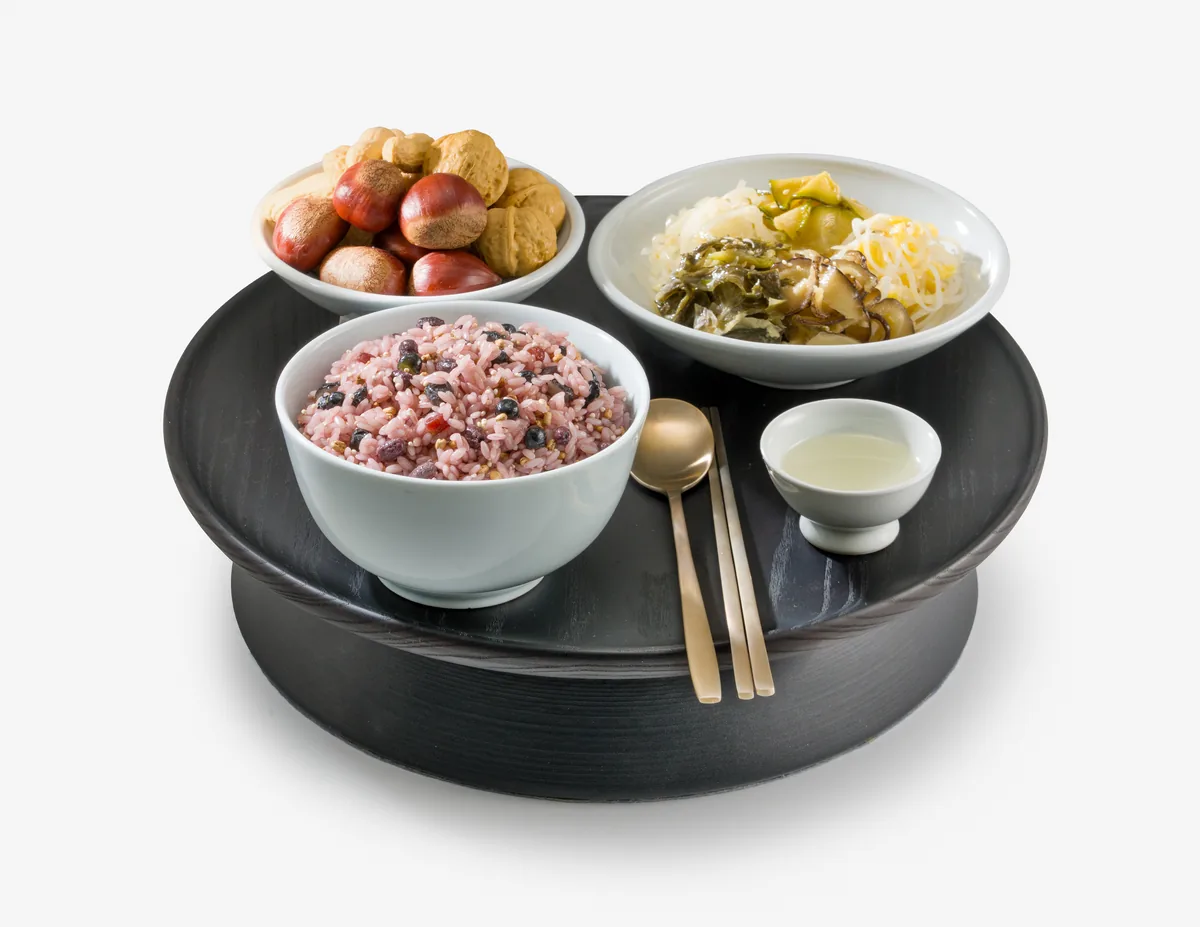
National Folk Museum of Korea Archive · "Jeongwol Daeboreum Seasonal Foods" (2025-008-00000003) · Photo by Seo Heon-gang · KOGL Type 1
Bokssam: wrapped in leaves of greens, not just laver
Bokssam is described as a Daeboreum food of rice wrapped in broad leaves. Because it is wrapped and eaten, it got the name "wrapping up bok (good fortune)." Originally it was wrapped in gim, dried laver, and boiled aster greens, napa cabbage leaves, taro leaves or castor-bean leaves were sometimes used instead. Yeoryang sesigi says the more you eat the better, and farming households are said to have a saying that the first spoonful should be eaten as a wrap.
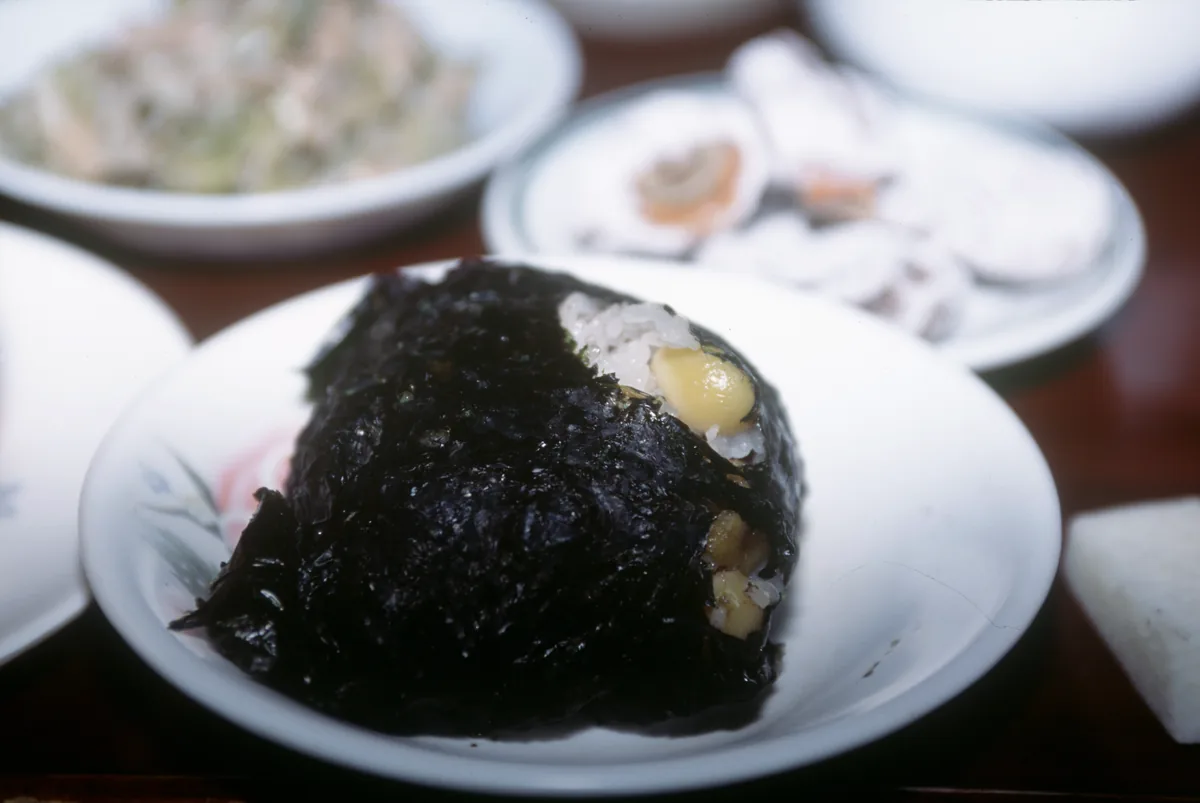
National Folk Museum of Korea Archive · "Bokssam" (2002-082-00000142) · Photo by Choi Ho-sik · KOGL Type 1
Reading the list of leaves used for wrapping, you think of the dried greens that come to the table on the same day. On one table, the greens were both a side dish and a cloth for wrapping up good fortune.
Byeotgaritdae: a pole with a set day for taking it down
The byeotgaritdae is not eaten or flown; it is set up and left standing. Look up byeotgaritdae in the encyclopedia, and it says that on the day before Daeboreum, ears of various grains were wrapped in bundles of rice straw, hung on a tall pole, and set up at one side of the main house or beside the cowshed. In Chinese characters it is hwagan (禾竿), "grain pole." Sometimes cotton bolls were hung under the straw bundle or straw ropes were draped down, and in the mountains people would cut a many-branched tree and hang it thick with grain ears and cotton.
What's interesting is that this object has an "end date." On the morning of Daeboreum, a child of the house would walk around the pole singing for a good harvest, and on the first day of the second lunar month, the pole was taken down and the grain hung on it was pounded and made into rice cakes. There is also an explanation that the cakes were shared among the family and those who worked in the house, but not with neighbors. It was a decoration with the day of raising, the day of taking down, and even the people who would eat from it all decided in advance.
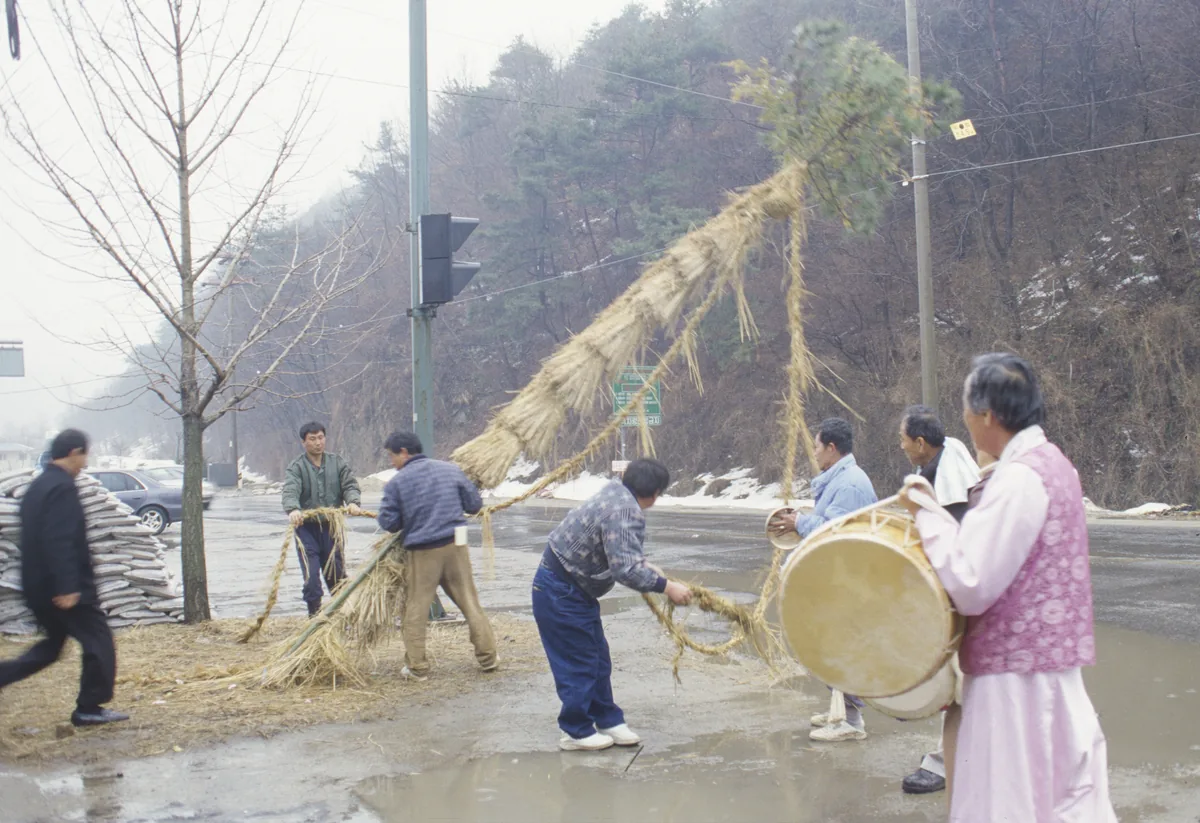
National Folk Museum of Korea Archive · "Dangjin Guryong-ri Byeotgaritdae Taking Down – Laying the Byeotgaritdae Down" (2001-054-00000031) · Photo by the National Folk Museum of Korea · KOGL Type 1
Where it was raised is recorded too. The byeotgaritdae custom is said not to be found north of the Han River but in Hoseo, Honam and Yeongnam. This was the view at the time of writing in 1995, so it does not tell us today's distribution as it is. Still, it shows that this was not "something raised everywhere on Daeboreum."
The misfortune-warding kite: a game that ends at the full moon
The kite is the busiest object right before Daeboreum. According to the encyclopedia, the real kite-flying season ran from the first to the fifteenth of the first lunar month, and children were already flying kites from around the twentieth of the twelfth month. And after the full moon, people stopped flying kites.
So the kite of the full-moon day is the last kite of the year. People wrote on it the single character 厄 (aek, misfortune), or 送厄 (songaek, "sending off misfortune") or 送厄迎福 (songaek yeongbok, "sending off misfortune, welcoming good fortune"), flew it, then let out all the thread on the reel and cut it, sending the kite far away. The idea was to send misfortune off and welcome good fortune. The entry also includes a story that anyone still flying kites after the full moon was teased as a gori baekjeong, a lowly basket maker. In the Sangwon section of Gyeongdo japji from the late 18th century, there is a record that children wrote the character 厄 on their kites and cut the strings at dusk to send them flying, followed by a description of crowds watching kite fights near Supyogyo Bridge over the Cheonggyecheon stream, lined up like a wall for a day or two before the full moon. It is a record that preserves a new-year scene in one Seoul neighborhood quite vividly.
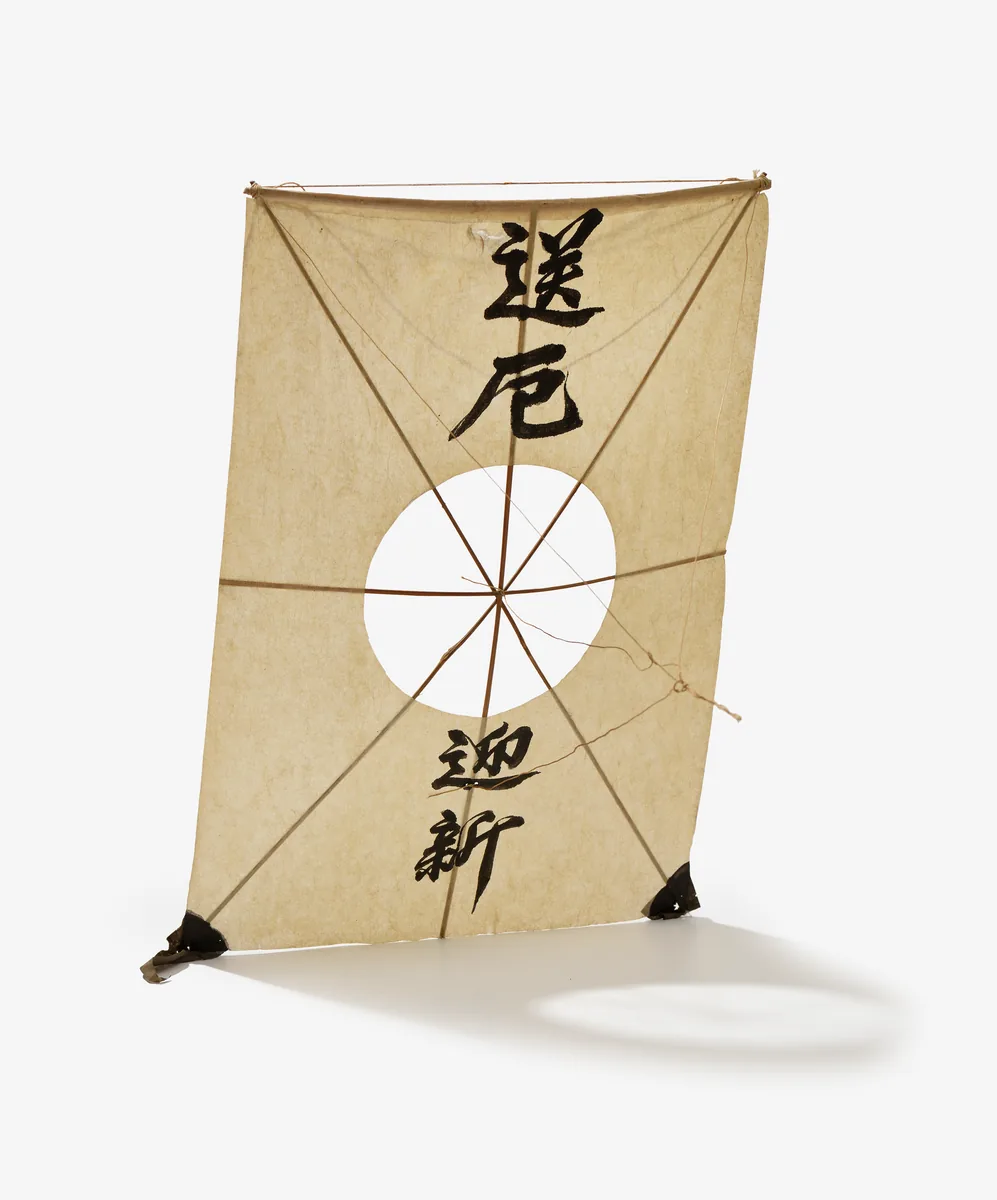
National Folk Museum of Korea · "Misfortune-Warding Kite" (Folk 4783) · Photo by Seo Heon-gang · Original · KOGL Type 1
Materials and shape
The encyclopedia's entry on kites also lays out how to make one in hands-on detail.
- Spars and paper: Bamboo was shaved thin like a skewer to make the spars, and the paper was usually changhoji, the paper used for window and door screens.
- An example of size: For a medium kite, the paper is cut 56 cm long and 46 cm wide, and one end is folded over about 2.5 cm to form the head. Kite size varied with the age of the flier and whether it was flown on a windy coast or inland.
- Center hole: A round hole is cut in the middle of the paper, about a third of the way down the kite's length. It is explained that strong wind escapes through this hole, so the body of the kite is less likely to be damaged.
- Kite string: Threads such as sangbaeksa, made from Korean silk, and dangbaeksa, made from Chinese silk, were used. To toughen the thread, people soaked it in boiled fish-bladder glue or starch paste mixed with powdered porcelain or glass, which was called "feeding it gami."
- Reel: There were four-, six- and eight-sided reels, and six- and eight-sided ones were often used for kite fights.
If you love color, this is the part where you linger. Korean kites are mostly the same rectangle, but their names split by the shape of the colored paper stuck to the "forehead" and the colors painted on. A half-moon shape on the forehead makes a bandaryeon (half-moon kite); a round "knob" makes a kkokjiyeon (knob kite), which is a meokkokji if the knob is black, a hongkkokji if red, a cheongkkokji if blue. Painting color on the lower part was called "wrapping it in a skirt," so these were chimayeon (skirt kites); with two colors they were idong (二同) skirts, with three, samdong skirts. Kites named in this way are said to number over 70 kinds. One frame, and by changing only the forehead and the skirt, more than 70 names. To recognize a kite in the sky, you would have had to look at its colors first.
Then what kind of kite was the misfortune-warding kite? I could not find any record saying the kite sent off on the full-moon day had to be a particular color or shape. If you come across an explanation like "the misfortune-warding kite is such-and-such a color," it is a good idea to ask for the source first.
Why isn't the bokjori here?
When Daeboreum objects are gathered together, the bokjori is sometimes included. But the encyclopedia describes the bokjori as a rice-rinsing scoop bought at dawn on Seollal, the Lunar New Year, and hung on the wall. It sees the custom as coming from the idea of scooping up the year's good fortune with a scoop used to sift rice, and adds that scoop sellers went around the alleys on the night of the last day of the year. That is why I left it out of this piece. With two holidays following one another in the first lunar month, the objects get mixed up easily, but the records divide the dates fairly clearly.
Looking again through the objects
Lay the five objects side by side, and a Daeboreum day appears in order. The day before, you raise the byeotgaritdae; at dawn, you crack bureom; in the morning, you take a sip of cold liquor; at the table, you wrap and eat bokssam; at dusk, you cut the kite string. And after the full moon, on the first day of the second month, you take the pole down and make rice cakes.
Each object carries a different wish, too. People wished for strong teeth, for sharp ears, to wrap up and eat good fortune, for a good harvest, for misfortune to go far away. These are not records that tell us whether the cracked chestnuts prevented boils or the cold liquor sharpened anyone's ears. They are records that show what people held in mind as they began a year. And even for the same bureom, there is radish in the 19th-century Seoul records and peanuts in today's market baskets. The byeotgaritdae is described as something raised south of the Han River. When you look at an object, it is good to also look at when and where it belongs.
Sources
- Korea Astronomy and Space Science Institute, 2026 annual calendar data
- Academy of Korean Studies, Encyclopedia of Korean Culture (한국민족문화대백과사전): Daeboreum, Bureom, Gwibalgisul, Bokssam, Byeotgaritdae, Kite flying, Kite, Bokjori