
Joseon Sent Its Shamans Away, Yet for 'the King's Sake' a Mudang Was There
A 1443 entry in the Veritable Records has an official saying that female mudang were sent outside the walls to care for the sick at the Hwarinwon. A memorial of 1477 describes the state mudang leading palace people to Gaeseong, and the governor of Gaeseong dancing face to face with the state's female mudang. Through two entries in the Veritable Records, we follow a Joseon that sent mudang away and yet kept them close.

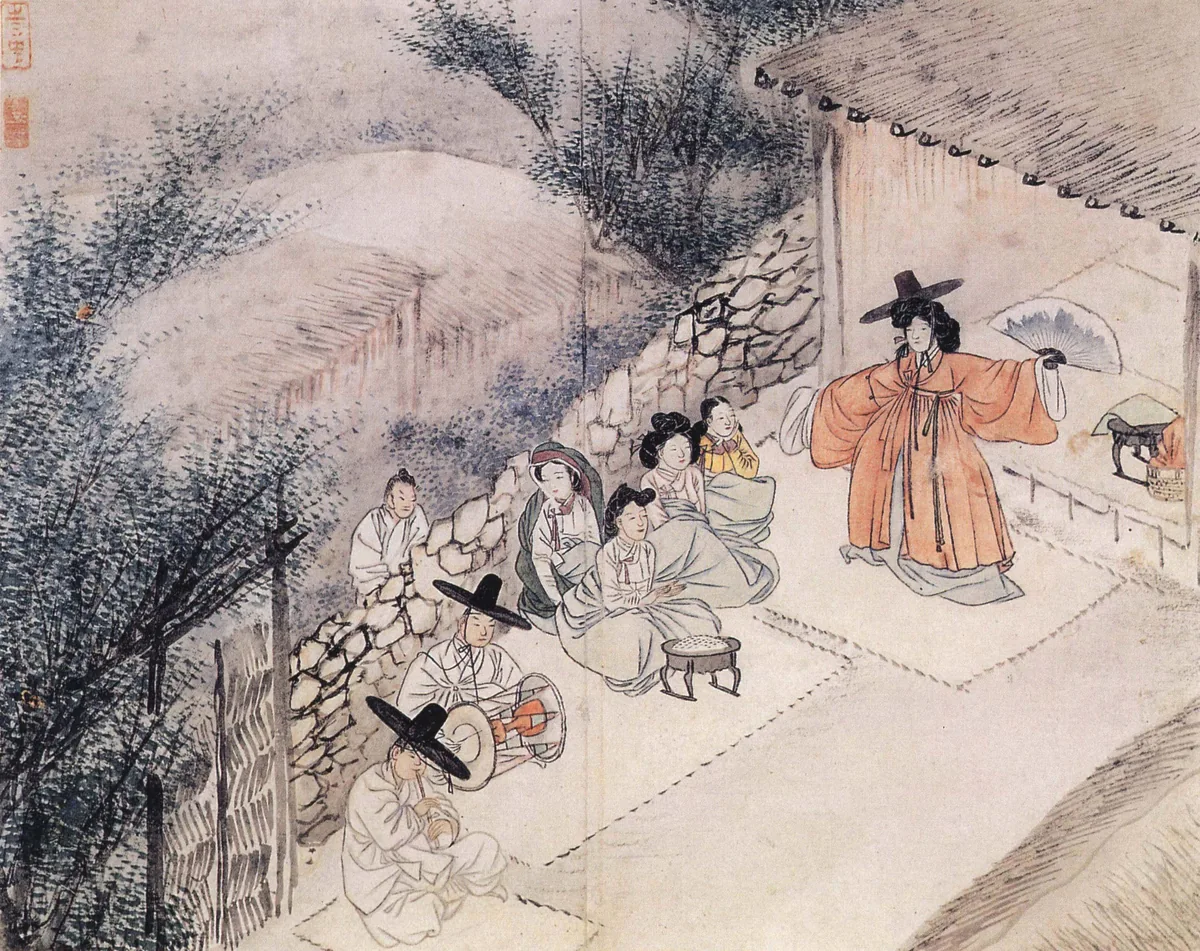
Image source Wikimedia Commons · Public Domain Mark 1.0
On this page
In the tenth month of 1443, Jo Ja (趙孜), a jangnyeong of the Office of the Inspector-General, made this report before King Sejong. All the female mudang have now been sent outside the city walls to care for the sick at the East and West Hwarinwon, yet the one called the gungmu (國巫), "state shaman," and more than twenty female mudang who tell fortunes are still inside the walls. So, apart from the gungmu, let all the rest be attached to the Hwarinwon to care for the sick.
It was a proposal to send mudang outside the walls, but where they were sent was beside the sick. And the one called "the state's mudang" was left out even of that request. A state that tried to keep mudang at a distance did not, in fact, grow very distant from them. From two entries in the Veritable Records, 34 years apart, I picked two scenes to follow.
Outside the city gates, beside the sick
In this entry of the Sejong sillok, Sejong's first answer is short: "The matter of female mudang has come down for a long time already, and cannot be changed all at once." When Jo Ja presses the request again, this time the king says something of a different texture. A law forbidding female mudang has already been made, so it need only be enforced strictly. He has heard that laws are strict at first and grow lax over time, so rather than making a new law, the existing one should be proclaimed again and the prohibition firmly enforced. "It's an old matter, so it can't be changed suddenly" and "It's already forbidden, so enforce it properly" are written side by side in one entry.
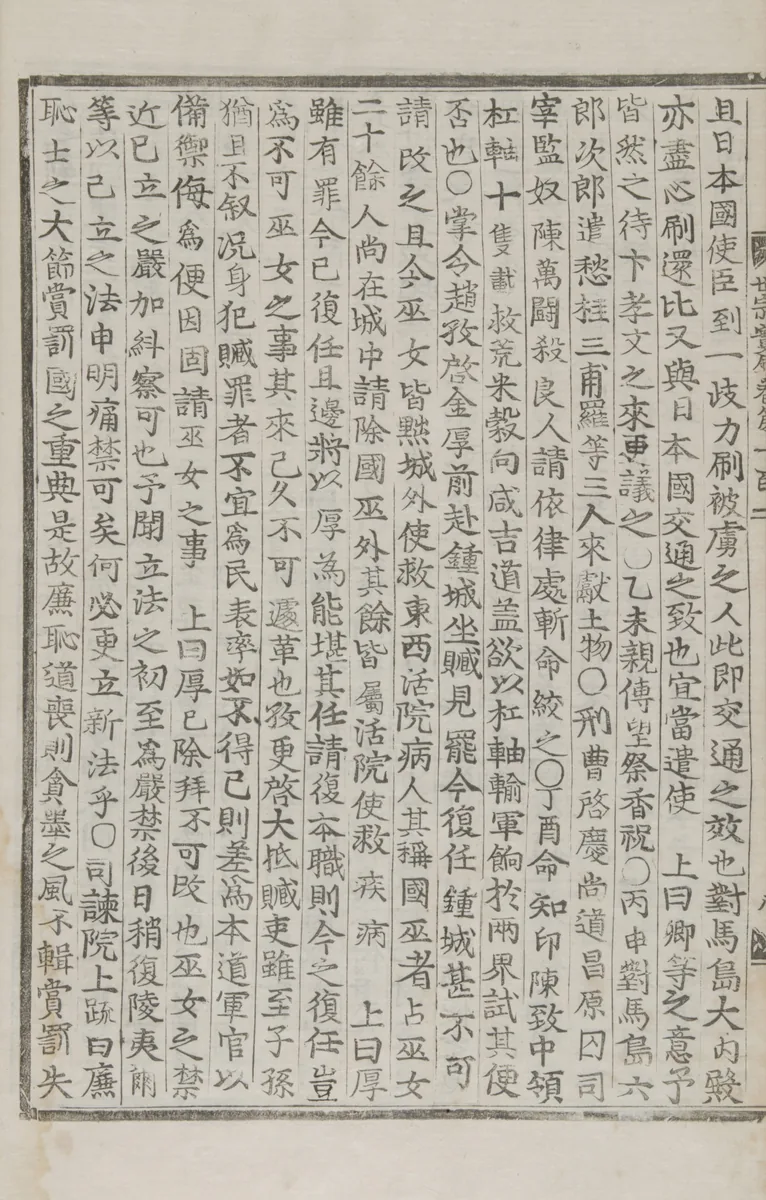
National Institute of Korean History · Sejong sillok, vol. 102, leaf 8B (Taebaeksan archive edition) · Original · KOGL Type 1 · Resized only
The East and West Hwarinwon, where the female mudang were sent, were, according to the Encyclopedia of Korean Culture, government offices that cared for the poor sick of the capital. The eastern one stood outside Dongdaemun Gate and the western one outside Seosomun Gate. They took in sick people with nowhere to go, set up sickhouses when epidemics spread to hand out food, medicine and clothing, and were even responsible for burying the dead. Under the regular officials were working staff such as doctors of traditional medicine and uimu (醫巫), monks who handled tasks, and monks who buried the dead.
So attaching female mudang to the Hwarinwon meant sending them outside the capital and placing them beside the sick in a single move, since the Hwarinwon themselves stood outside the city gates. What the records tell us goes as far as where the state placed the female mudang. They don't say what effect the women's care had on the sick.
A dance face to face at the Gaeseong guesthouse
In the eleventh month of 1477, a long memorial by Simwon (深源), Jugye bujeong, appeared in the Seongjong sillok. Simwon was a relative of the royal house who called himself the lowest seat of the royal clan. In this text, which lays out point by point matters for the king to set right, he writes that the king has already sought out the mugyeok, the shamans, driven them outside the walls, and divided them among the East and West Hwarinwon. Then, saying straight away that laws fail to take hold because they are broken from the top down, he cites several rites tied to the palace.
One of them is a rite of praying for blessings at Mount Songak. The scene Simwon draws goes like this. The one called the gungmudang (國巫堂) leads palace women and eunuchs, four or five musicians and five or six singers; each rides a post horse, and they pass noisily along the road into the official guesthouse at Gaeseong. There they sing, dance and feast, staying for dozens of days.
The next scene is even more striking. The yusu, governor of Gaeseong, is a minister of the second rank, yet the gungmunyeo (國巫女), the state's female mudang, always stands facing him and dances, and this is treated as customary, with the words, "It is for the king, so it cannot be otherwise." Simwon wrote that it was lamentable that the corruption of custom had come to this.
This scene was painted by the brush of someone who wanted the rite stopped. The size of the procession, the dozens of days, the governor's words: all of it is what Simwon conveyed to the king. Still, in the very text that says, on one side, that the mugyeok were being sent outside the walls, there also appears, on the other, a criticism that a rite in which a minister danced face to face with the state's female mudang was called "for the king."
A state that sent them away and kept them close
The two entries, 34 years apart, say the same thing: that mudang were sent outside the walls and placed at the Hwarinwon. But in Simwon's text, "the state's mudang" travels to Gaeseong with palace people to perform a rite called "for the king." At that point, Sejong's first answer comes back to mind: the matter of female mudang has come down for a long time already, and cannot be changed all at once.
The state in these two records proclaimed again and again its laws to keep mudang at a distance, yet placed mudang both beside the sick and in rites said to be for the king. Sending them away and keeping them close were not separate things. The gungmu of 1443 and the state's female mudang in Gaeseong were both named in writings urging that mudang be kept further away. In effect, the writings urging distance from mudang are what preserved how close mudang actually were.
Sources
- National Institute of Korean History, Veritable Records of the Joseon Dynasty: Sejong sillok, 25th year of Sejong, 10th month, 16th day, 2nd entry; Seongjong sillok, 8th year of Seongjong, 11th month, 26th day, 1st entry. The quoted exchanges follow the Korean translation and the original text of the two entries.
- Academy of Korean Studies, Encyclopedia of Korean Culture (한국민족문화대백과사전), East and West Hwarinwon